NIOS Bridge Course Course 4 Syllabus 2026 – Pedagogy of Language-II
NIOS Bridge Course Course 4 Syllabus 2026 – Pedagogy of Language-II
NIOS Bridge Course Course 4 का नाम Pedagogy of Language-II (English/other than Language-I) है। यह NIOS 6 Month Bridge Course for In-Service Teachers का एक महत्वपूर्ण pedagogical course है।
इस course में teachers को Language-II education, multilingualism, second language acquisition, oral language development, Four Block Approach, word recognition, reading, writing, lesson planning और language assessment जैसे महत्वपूर्ण विषयों का अध्ययन कराया जाता है।
Course 4 विशेष रूप से English या Language-I के अलावा अन्य Language-II के teaching-learning process को समझने में मदद करता है।
Official Programme Guide के अनुसार Course 4 में कुल 3 Units और 11 Chapters हैं। यह 2 Credits का course है। इसके लिए 4 online contact sessions और कुल 6 contact hours निर्धारित हैं।
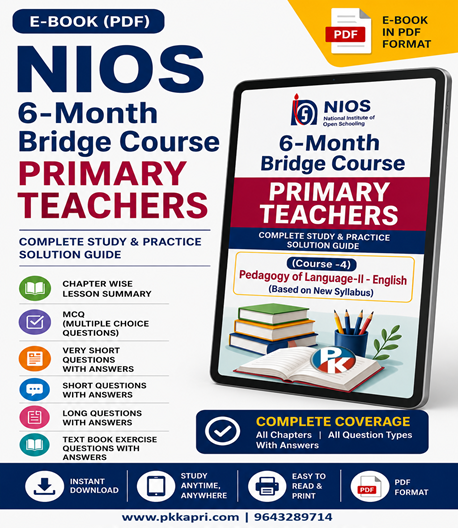
NIOS Bridge Course Course 4 – Quick Details
| Details | Information |
|---|---|
| Course Number | Course 4 |
| Course Name | Pedagogy of Language-II |
| Language | English / Other than Language-I |
| Total Units | 3 |
| Total Chapters | 11 |
| Credits | 2 |
| Online Sessions | 4 Sessions |
| Duration of Each Session | 90 Minutes |
| Total Contact Hours | 6 Hours |
| Internal Assessment | 25 Marks |
| Term-End Examination | 25 Marks |
| Total Marks | 50 |
| External Exam Duration | 1 Hour |
Course 4 के लिए internal assessment 25 marks और term-end examination 25 marks का है। Pedagogic courses में Course 4 की external examination 1 hour duration की है।
NIOS Bridge Course Course 4 Syllabus – Unit Wise Details
Course 4 का syllabus तीन मुख्य Units में divided है:
- Unit 1 – Understanding Language Education and Multilingualism
- Unit 2 – Pedagogy and Resources
- Unit 3 – Planning and Assessment
अब सभी Units और Chapters को विस्तार से समझते हैं।
Unit 1 – Understanding Language Education and Multilingualism
भाषा शिक्षा एवं बहुभाषिकता की समझ
Unit 1 में language education, policy perspectives, multilingualism, second language acquisition, curricular goals, competencies और learning outcomes का अध्ययन किया जाता है।
इस Unit में कुल 2 Chapters हैं।
Chapter 1 – Language Education: Various Policies and Multilingualism
भाषा शिक्षा: विभिन्न नीतियाँ एवं बहुभाषिकता
इस chapter में Language-I और Language-II के संदर्भ में language education और विभिन्न educational policies का अध्ययन किया जाता है।
Important Topics
- Language Education
- Language Policy Perspectives
- Language-I and Language-II
- National Education Policy 2020
- NCF-FS 2022
- NCF-SE 2023
- Other Policy Documents and Commissions
- Bi-/Multilingualism
- Multilingualism and Scholastic Achievement
- Need to Promote Multilingualism
- Multilingualism as a Classroom Resource
- Challenges and Practices for Promoting Multilingualism
Official syllabus में NEP 2020, NCF-FS 2022 और NCF-SE 2023 के संदर्भ में language-related provisions तथा multilingualism को classroom resource के रूप में शामिल किया गया है।
English Explanation
This chapter helps teachers understand the policy perspective of language education and the role of Language-I and Language-II in school education.
It also examines multilingualism, including the need to promote it, its relationship with scholastic achievement, classroom challenges and practices for supporting multilingual learning.
हिंदी में समझें
भारत की classroom में बच्चों की home language, mother tongue और school language अलग-अलग हो सकती हैं। इसलिए teacher को multilingual classroom की वास्तविक परिस्थितियों को समझना और उपलब्ध भाषाओं को learning resource के रूप में उपयोग करना सीखना आवश्यक है।
Chapter 2 – Second Language Acquisition and Curricular Goals
द्वितीय भाषा अर्जन एवं पाठ्यचर्या लक्ष्य
यह Course 4 का महत्वपूर्ण chapter है।
इसमें बच्चों द्वारा mother tongue से अन्य languages सीखने की प्रक्रिया और Language-II learning से संबंधित challenges को समझाया जाता है।
Important Topics
- Second Language Acquisition
- Second Language Learning
- Learning from Mother Tongue to Other Tongues
- Advantages of Learning Other Languages
- First Language
- Second Language
- Other Languages
- Concerns and Challenges in L-II Learning
- Indian Classroom Context
- Curricular Goals
- Competencies
- Learning Outcomes
Official syllabus में second language learning, first/second language की अवधारणा, Indian classroom context में L-II learning की concerns और challenges तथा Language-II के curricular goals, competencies और learning outcomes शामिल हैं।
English Explanation
Second language learning is studied in relation to children’s existing language experiences and their movement from the mother tongue to other languages.
The chapter also focuses on the advantages of learning other languages and the major challenges teachers may encounter while teaching Language-II in multilingual Indian classrooms.
हिंदी में
Language-II सीखते समय सभी बच्चों का experience समान नहीं होता। उनकी mother tongue, पहले से सीखी गई language और school environment अलग हो सकते हैं। इसलिए Language-II teaching को children’s language background के अनुसार समझना महत्वपूर्ण है।
Unit 1 Summary
| Chapter | Topic |
|---|---|
| Chapter 1 | Language Education: Various Policies and Multilingualism |
| Chapter 2 | Second Language Acquisition and Curricular Goals |
Unit 1 का मुख्य Focus:
Language Education, NEP 2020, NCF-FS 2022, NCF-SE 2023, Bi-/Multilingualism, Second Language Acquisition, Curricular Goals, Competencies और Learning Outcomes.
Unit 2 – Pedagogy and Resources
शिक्षाशास्त्र एवं संसाधन
Unit 2 Course 4 का मुख्य pedagogical section है।
इसमें Language-II को effectively teach करने के लिए Four Block Approach, oral language, word recognition, reading, writing और learning resources का अध्ययन किया जाता है।
इस Unit में कुल 4 Chapters हैं।
Chapter 3 – Four Block Approach and Oral Language Development
चार ब्लॉक दृष्टिकोण एवं मौखिक भाषा-विकास
इस chapter में Language-II teaching के लिए Four Block Approach का अध्ययन किया जाता है।
Four Block Approach के चार मुख्य Areas
- Oral Language Development
- Word Recognition
- Reading
- Writing
Official syllabus में Four Block Approach के इन चार प्रमुख components को शामिल किया गया है।
Oral Language Development
इस chapter में listening की भूमिका और oral expression के साथ-साथ Language-II में listening और speaking skills को develop करने की methods एवं activities शामिल हैं।
Important Activities
- Conversation
- Picture Description
- Sharing of Experiences
- Storytelling
- Drama
- Role Play
- Situational Conversation
- Speech
- Language Games
- Creative Thinking
- Asking Questions
- Giving Opinions
- Providing Feedback
हिंदी में समझें
Language-II सीखने में बच्चों को केवल grammar या written exercises तक सीमित नहीं रखना चाहिए। Listening और speaking activities के माध्यम से language को meaningful context में use करने के अवसर देना भी महत्वपूर्ण है।
Chapter 4 – Word Recognition: Various Strategies
शब्द-पहचान: विभिन्न रणनीतियाँ
इस chapter में Language-II के words और written language को पहचानने तथा vocabulary development के लिए विभिन्न strategies का अध्ययन किया जाता है।
Important Topics
- Phonemic Awareness
- Letter Recognition
- Sound-Symbol Association
- Word Recognition
- Recognition of Words and Sentences
- Reading and Writing of Words
- Reading and Writing of Sentences
- Vocabulary Development
- Stories
- Poems
Official syllabus में phonemic awareness, letter recognition, sound-symbol association और stories तथा poems के माध्यम से vocabulary development शामिल है।
हिंदी में
Word recognition केवल शब्द याद करना नहीं है। Sounds, letters, written words और sentences के बीच संबंध समझना तथा stories और poems के माध्यम से vocabulary develop करना भी इसका हिस्सा है।
Chapter 5 – Reading and Various Resources
पठन एवं विभिन्न संसाधन
इस chapter में reading को understanding और learning से जोड़कर समझाया गया है।
Important Reading Concepts
- Reading is Understanding
- Reading to Learn
- Schema Building
- Reading Diverse Forms of Text
- Expository Text
Types of Reading
- Extensive Reading
- Intensive Reading
- Reading Aloud
- Silent Reading
- Shared Reading
- Guided Reading
- Independent Reading
Reading Strategies
- Pre-Reading Activities
- Post-Reading Activities
Reading Resources
- Reading Corner
- Children’s Literature
- Children’s Magazines
- Posters
- Pictures
- Newspapers
- Hoardings
- Letter Cards
- Word Cards
- Sentence Cards
- Textbooks
- Supplementary Materials
- Jaadui Pitara
- Audio-Video Programmes
- E-Content
- DIKSHA Portal
Official syllabus में विभिन्न types of reading, pre-reading और post-reading activities तथा reading development के लिए multiple resources शामिल हैं।
हिंदी में समझें
Reading का उद्देश्य केवल words को aloud पढ़ लेना नहीं है। बच्चे text को समझें, information प्राप्त करें और learning के लिए reading का उपयोग करें-यह भी महत्वपूर्ण है।
Chapter 6 – Writing and Development of Writing Skill
लेखन एवं लेखन कौशल का विकास
इस chapter में Language-II में writing skill development का अध्ययन किया जाता है।
Important Topics
- What is Writing?
- Reading-Writing Connection
- Stages of Writing
- Process of Writing
- Modelled Writing
- Shared Writing
- Guided Writing
- Independent Writing
- Formal Writing
- Informal Writing
- Writing for a Purpose
Different Forms of Writing
- Stories
- Poems
- Letters
- Diary
- Articles
- Dialogues
- Speech
Official syllabus में writing process और modelled, shared, guided तथा independent writing के साथ formal और informal writing forms शामिल हैं।
हिंदी में
Writing को केवल copying या handwriting practice के रूप में नहीं देखना चाहिए। बच्चों को अलग-अलग उद्देश्यों के लिए अपने विचार लिखने और express करने के अवसर मिलने चाहिए।
Unit 2 Summary
| Chapter | Topic |
|---|---|
| Chapter 3 | Four Block Approach and Oral Language Development |
| Chapter 4 | Word Recognition: Various Strategies |
| Chapter 5 | Reading and Various Resources |
| Chapter 6 | Writing and Development of Writing Skill |
Unit 3 – Planning and Assessment
योजना एवं आकलन
Unit 3 में Language-II teaching की planning और oral language, reading तथा writing assessment से संबंधित topics शामिल हैं।
इस Unit में कुल 5 Chapters हैं।
Chapter 7 – Development of Unit Plans and Chapter Plans
इकाई योजना एवं पाठ योजना का निर्माण
इस chapter में Language-II के curricular goals और learning outcomes के आधार पर unit plans तथा chapter plans बनाने का अध्ययन किया जाता है।
Important Topics
- Unit Planning
- Chapter Planning
- Curricular Goals
- Learning Outcomes
- Planning for Language-II Teaching
Official syllabus के अनुसार unit plans और chapter plans को Language-II के curricular goals और learning outcomes के आधार पर develop किया जाता है।
Planning करते समय विचार करें
- क्या पढ़ाना है?
- किस learning outcome को प्राप्त करना है?
- कौन-सी activities उपयोग करनी हैं?
- कौन-से resources चाहिए?
- बच्चों की learning को कैसे assess करना है?
Chapter 8 – Assessment of Oral Language: Various Tools and Strategies
मौखिक भाषा का आकलन: विभिन्न उपकरण एवं रणनीतियाँ
इस chapter में Language-II की oral language skills को assess करने के tools और strategies शामिल हैं।
Important Areas
- Sound Recognition
- Word Selection
- Sentence Structure
- Comprehending Information
- Responding
- Conversation
- Storytelling
- Dialogue Delivery
- Intonation
- Pace
- Pause
- Clarity
- Fluency
- Understanding in Context
Official syllabus में इन skills और areas को Language-II oral language assessment के लिए शामिल किया गया है।
हिंदी में
Assessment करते समय केवल यह नहीं देखना चाहिए कि बच्चा बोल रहा है या नहीं। उसकी comprehension, sentence structure, clarity, fluency, storytelling और context को समझने की क्षमता भी देखी जा सकती है।
Chapter 9 – Assessment of Reading: Various Tools and Strategies
पठन का आकलन: विभिन्न उपकरण एवं रणनीतियाँ
इस chapter में reading skills और reading comprehension का assessment शामिल है।
Important Topics
- Reading with Comprehension
- Reading Different Types of Text
- Reading for Specific Information
- Reading Words
- Reading Sentences
- Reading Paragraphs
- Familiar Text
- Unfamiliar Text
- Giving Opinions
- Giving Feedback
- Miscue Analysis
- Worksheets
- Assessment Items
- Question Paper Development
Official syllabus में reading assessment के साथ miscue analysis, worksheets, assessment items और question paper development भी शामिल है।
हिंदी में
Reading assessment में बच्चे के केवल सही pronunciation को नहीं, बल्कि text को समझने, specific information खोजने और familiar तथा unfamiliar texts पर प्रतिक्रिया देने की क्षमता को भी देखा जा सकता है।
Chapter 10 – Assessment of Writing: Various Tools and Strategies
लेखन का आकलन: विभिन्न उपकरण एवं रणनीतियाँ
इस chapter में Language-II writing skills के assessment का अध्ययन किया जाता है।
Important Topics
- Writing with Understanding
- Organizing Ideas
- Listening and Writing
- Creative Writing
- Stories
- Poems
- Dialogues
- Experiences
- Information Writing
- Sentence and Paragraph Combination
- Use of Punctuation Marks
- Grammar in Context
- Worksheets
- Assessment Items
- Question Paper Development
Official syllabus में writing assessment के लिए इन writing forms और assessment tools/strategies को शामिल किया गया है।
हिंदी में
Writing assessment में केवल spelling mistakes या handwriting नहीं देखी जाती। Ideas को organize करना, meaningful writing, punctuation और context में grammar का उपयोग भी महत्वपूर्ण हो सकता है।
Chapter 11 – Other Dimensions of Assessment
आकलन के अन्य पक्ष
यह Course 4 का अंतिम chapter है।
Important Topics
- Self-Correction
- 360° Assessment
Official syllabus में self-correction और 360° assessment को इस chapter में शामिल किया गया है।
Unit 3 Summary
| Chapter | Topic |
|---|---|
| Chapter 7 | Development of Unit Plans and Chapter Plans |
| Chapter 8 | Assessment of Oral Language |
| Chapter 9 | Assessment of Reading |
| Chapter 10 | Assessment of Writing |
| Chapter 11 | Other Dimensions of Assessment |
Complete NIOS Bridge Course Course 4 Syllabus Table
| Unit | Chapter | Chapter Name |
|---|---|---|
| Unit 1 | Chapter 1 | Language Education: Various Policies and Multilingualism |
| Chapter 2 | Second Language Acquisition and Curricular Goals | |
| Unit 2 | Chapter 3 | Four Block Approach and Oral Language Development |
| Chapter 4 | Word Recognition: Various Strategies | |
| Chapter 5 | Reading and Various Resources | |
| Chapter 6 | Writing and Development of Writing Skill | |
| Unit 3 | Chapter 7 | Development of Unit Plans and Chapter Plans |
| Chapter 8 | Assessment of Oral Language | |
| Chapter 9 | Assessment of Reading | |
| Chapter 10 | Assessment of Writing | |
| Chapter 11 | Other Dimensions of Assessment |
Course 4 at a Glance
3 Units + 11 Chapters + 2 Credits + 4 Online Sessions + 6 Contact Hours
NIOS Bridge Course Course 4 Assessment Pattern
Course 4 की assessment दो parts में होती है:
1. Internal Assessment
- 25 Marks
- 1 Credit
- Assignments and Project Work
2. Term-End Examination
- 25 Marks
- 1 Credit
- Written Examination
- 1 Hour Duration
Total
50 Marks + 2 Credits
Official assessment structure के अनुसार theory courses के internal assessment के लिए assignments/project work और Course 4 की external assessment के लिए 25 marks की 1-hour written examination निर्धारित है।
Course 4 Internal Assessment – Important Tasks
Course 4 के internal assessment के लिए TWO (2) tasks mandatory हैं।
Official guide के अनुसार:
Section A से ONE task और Section B से ONE task करना है।
SECTION A – Any One Task
Task 1 – Language Education Recommendations
NCF-FS 2022 और NCF-SE 2023 में English या किसी Language-II/Language-III के लिए Foundational और Preparatory Stage से संबंधित curricular तथा pedagogic recommendations पर critically discuss करके report तैयार करें।
Task 2 – Textbook Analysis
वर्तमान NCERT या State Board की English अथवा किसी Language-II textbook का critical analysis करें।
Analysis में निम्न aspects शामिल हो सकते हैं:
- Learning Outcomes
- Language
- Content
- Illustrations
- Inclusion
- Stereotypes
- Assessment
Task 3 – DIKSHA Video Analysis
DIKSHA Portal से Foundational या Preparatory Stage के किसी English अथवा Language-II topic का video programme देखकर उसका critical analysis और detailed report तैयार करें।
SECTION B – Any One Task
Task 1 – Unit Plan
English या किसी Language-II में Four Block Model का उपयोग करते हुए Foundational या Preparatory curriculum के किसी topic पर 7–10 days का unit plan तैयार करें।
Task 2 – Challenges in Language-II Learning
अपने multilingual Indian classroom के संदर्भ में English अथवा Language-II learning से जुड़ी challenges पर चर्चा करें और उन्हें address करने के लिए strategies सुझाएं।
Task 3 – Oral Language Assessment
Foundational Stage में oral language को assess करने के लिए किसी पांच strategies का classroom में उपयोग करें और बच्चों के साथ अपने experiences पर reflect करें।
Task 4 – Worksheet Folder
Four Block Model के संदर्भ में Foundational Stage पर English या किसी Language-II में reading या writing skills develop करने के लिए कम से कम 5 worksheets का folder तैयार करें।
Task 5 – Analysis of Children’s Written Work
अपनी class के बच्चों की notebooks और worksheets का analysis करें।
English या Language-II में होने वाली errors के patterns देखें और report में शामिल करें:
- Types of Errors
- Possible Causes
- Suggestive Activities/Approaches
Task 6 – Low-Cost / No-Cost Learning Material
Foundational या Preparatory class के लिए English अथवा Language-II language skills develop करने हेतु effective और useful low-cost/no-cost learning material तैयार करें।
इसे classroom में use करके अपने experience का analysis करें।
Task 7 – Jaadui Pitara / ICT Resources
Jaadui Pitara, e-Jaadui Pitara या ICT resource का उपयोग करके English या Language-II language skills develop करने पर detailed report तैयार करें और उसे Language-II learning outcomes से link करें।
NIOS Bridge Course Course 4 – Online Contact Classes
Official 10-day online contact class schedule के अनुसार Course 4 के लिए:
- Course: Pedagogy of Language-II
- Credits: 2
- Chapters: 11
- Units: 3
- Sessions: 4
- Each Session: 90 Minutes
- Total Contact Hours: 6 Hours
निर्धारित हैं।
Programme Guide के अनुसार contact classes online mode में कम से कम 10 days के लिए आयोजित की जाती हैं और programme के six theoretical courses को cover करती हैं।
Course 4 की तैयारी कैसे करें?
Course 4 की preparation करते समय syllabus को Unit-wise समझना उपयोगी रहेगा।
Step 1 – Unit 1 को Conceptually समझें
इन topics पर ध्यान दें:
- Language Education
- NEP 2020
- NCF-FS 2022
- NCF-SE 2023
- Multilingualism
- Second Language Acquisition
- Curricular Goals
- Competencies
- Learning Outcomes
Step 2 – Four Block Approach को समझें
इन चार areas को अच्छी तरह समझें:
Oral Language → Word Recognition → Reading → Writing
Step 3 – Reading और Writing Skills पर ध्यान दें
Reading के विभिन्न forms और writing process को examples के साथ समझें।
Step 4 – Assessment Topics तैयार करें
विशेष रूप से:
- Oral Language Assessment
- Reading Assessment
- Writing Assessment
- Miscue Analysis
- Worksheets
- Assessment Items
- Self-Correction
- 360° Assessment
पर ध्यान दें।
Step 5 – Internal Assessment समय पर तैयार करें
Official guide के अनुसार Section A से एक और Section B से एक task चुनकर reports तैयार करनी हैं।
NIOS Bridge Course Course 4 Study Material in Multiple Mediums
हर in-service teacher की language preference एक जैसी नहीं होती। भारत के अलग-अलग राज्यों और क्षेत्रों में teachers Hindi, English और विभिन्न regional languages में study material पढ़ना पसंद कर सकते हैं।
इसीलिए PK Kapri & Co. पर NIOS Bridge Course के study resources को multiple mediums में उपलब्ध कराने पर focus किया जाता है।
Available / Supported Study Material Mediums
हमारे NIOS Bridge Course study material resources में विभिन्न mediums के लिए सामग्री उपलब्ध कराई जाती है, जैसे:
- Hindi Medium
- English Medium
- Punjabi Medium
- Telugu Medium
- Tamil Medium
- Urdu Medium
- Bengali / Bangla Medium
- और अन्य Regional Language Mediums
Study Resources में क्या उपलब्ध हो सकता है?
Course और medium की availability के अनुसार resources में शामिल हो सकते हैं:
- Complete Study E-Books / Guides
- Course-wise Study Material
- Solved Exercises
- Important Questions
- Model Practice Papers
- PDF Study Resources
अपनी Preferred Language में Study करें
Hindi, English, Punjabi, Telugu, Tamil, Urdu, Bengali/Bangla या अन्य regional language background वाले teachers अपनी preferred medium के अनुसार available study resources check कर सकते हैं।
Current Course और Medium availability देखने के लिए visit करें:
📲 WhatsApp: 9643289714
Course 4 में किन Topics पर विशेष ध्यान दें?
Language Education
- Language Policy
- NEP 2020
- NCF-FS
- NCF-SE
- Multilingualism
Second Language Learning
- First Language
- Second Language
- Other Languages
- Second Language Acquisition
- Challenges of L-II Learning
Four Block Approach
- Oral Language
- Word Recognition
- Reading
- Writing
Reading
- Reading for Understanding
- Extensive and Intensive Reading
- Shared Reading
- Guided Reading
- Independent Reading
- Pre-Reading and Post-Reading Activities
Writing
- Writing Process
- Modelled Writing
- Shared Writing
- Guided Writing
- Independent Writing
- Formal and Informal Writing
Assessment
- Oral Language Assessment
- Reading Assessment
- Writing Assessment
- Miscue Analysis
- Worksheets
- Assessment Items
- Self-Correction
- 360° Assessment
NIOS Bridge Course Course 4 FAQs
Q1. NIOS Bridge Course Course 4 का नाम क्या है?
Course 4 का नाम Pedagogy of Language-II (English/other than Language-I) है।
Q2. Course 4 में कितने Units हैं?
Course 4 में कुल 3 Units हैं।
Q3. Course 4 में कितने Chapters हैं?
Course 4 में कुल 11 Chapters हैं।
Q4. Course 4 कितने Credits का है?
Course 4 2 Credits का course है।
Q5. Course 4 में कुल कितने marks हैं?
Course 4 में कुल 50 Marks हैं:
- Internal Assessment – 25 Marks
- Term-End Examination – 25 Marks
Q6. Course 4 का exam कितने घंटे का होता है?
Course 4 की Term-End Examination 1 hour की है।
Q7. Course 4 की online contact classes कितनी हैं?
Course 4 के लिए 4 sessions निर्धारित हैं। प्रत्येक session 90 minutes का है और कुल 6 contact hours हैं।
Q8. Four Block Approach में कौन-कौन से areas शामिल हैं?
Four Block Approach में:
- Oral Language
- Word Recognition
- Reading
- Writing
शामिल हैं।
Q9. Course 4 में Second Language Acquisition क्या है?
इस chapter में mother tongue से other languages सीखने, first language, second language और Indian classroom context में Language-II learning की concerns एवं challenges का अध्ययन शामिल है।
Q10. Course 4 में Internal Assessment के कितने tasks करने होते हैं?
दो tasks mandatory हैं:
- Section A से One Task
- Section B से One Task
Q11. क्या Course 4 के लिए multiple language mediums में study material मिल सकता है?
Course और medium की वर्तमान availability के अनुसार Hindi, English, Punjabi, Telugu, Tamil, Urdu, Bengali/Bangla तथा अन्य regional language resources देखने के लिए www.pkkapri.com visit करें या WhatsApp 9643289714 पर संपर्क करें।
Conclusion
NIOS Bridge Course Course 4 – Pedagogy of Language-II language teaching से संबंधित एक महत्वपूर्ण pedagogical course है।
इसमें teachers को language education और multilingualism से लेकर second language acquisition, Four Block Approach, oral language development, word recognition, reading, writing, planning और assessment तक महत्वपूर्ण concepts का अध्ययन करना होता है।
Course 4 को तीन मुख्य Units में divided किया गया है:
Unit 1 – Understanding Language Education and Multilingualism
Unit 2 – Pedagogy and Resources
Unit 3 – Planning and Assessment
कुल मिलाकर Course 4 में:
3 Units + 11 Chapters + 2 Credits + 4 Online Sessions + 6 Contact Hours
शामिल हैं।
NIOS Bridge Course Study Material – Multiple Mediums
यदि आप NIOS 6 Month Bridge Course की तैयारी के लिए Course-wise Study Material, Complete Study E-Books/Guides, Solved Exercises और Model Practice Papers ढूंढ रहे हैं, तो उपलब्ध resources और medium options देखने के लिए:
PK Kapri & Co.
📲 WhatsApp: 9643289714
Available Mediums / Language Options
Hindi | English | Punjabi | Telugu | Tamil | Urdu | Bengali/Bangla | Other Regional Languages
अपनी Course और Medium availability के अनुसार हमारी website पर available study resources देखें।
Read More
- NIOS Bridge Course Course 4 Syllabus 2026
- NIOS Bridge Course Course 4
- NIOS Course 4 Syllabus
- Pedagogy of Language-II
- NIOS Pedagogy of Language 2
- NIOS Course 4 English
- NIOS Bridge Course Language-II
- Second Language Acquisition NIOS
- Four Block Approach NIOS
- NIOS Course 4 Study Material
- NIOS Bridge Course Course 4 PDF
- NIOS Course 4 Notes
- NIOS Course 4 Assignment
- NIOS Course 4 Solved Assignment
- NIOS Bridge Course Study Material Hindi
- NIOS Bridge Course Study Material English
- NIOS Bridge Course Punjabi Study Material
- NIOS Bridge Course Telugu Study Material
- NIOS Bridge Course Tamil Study Material
- NIOS Bridge Course Urdu Study Material
- NIOS Bridge Course Bengali Study Material